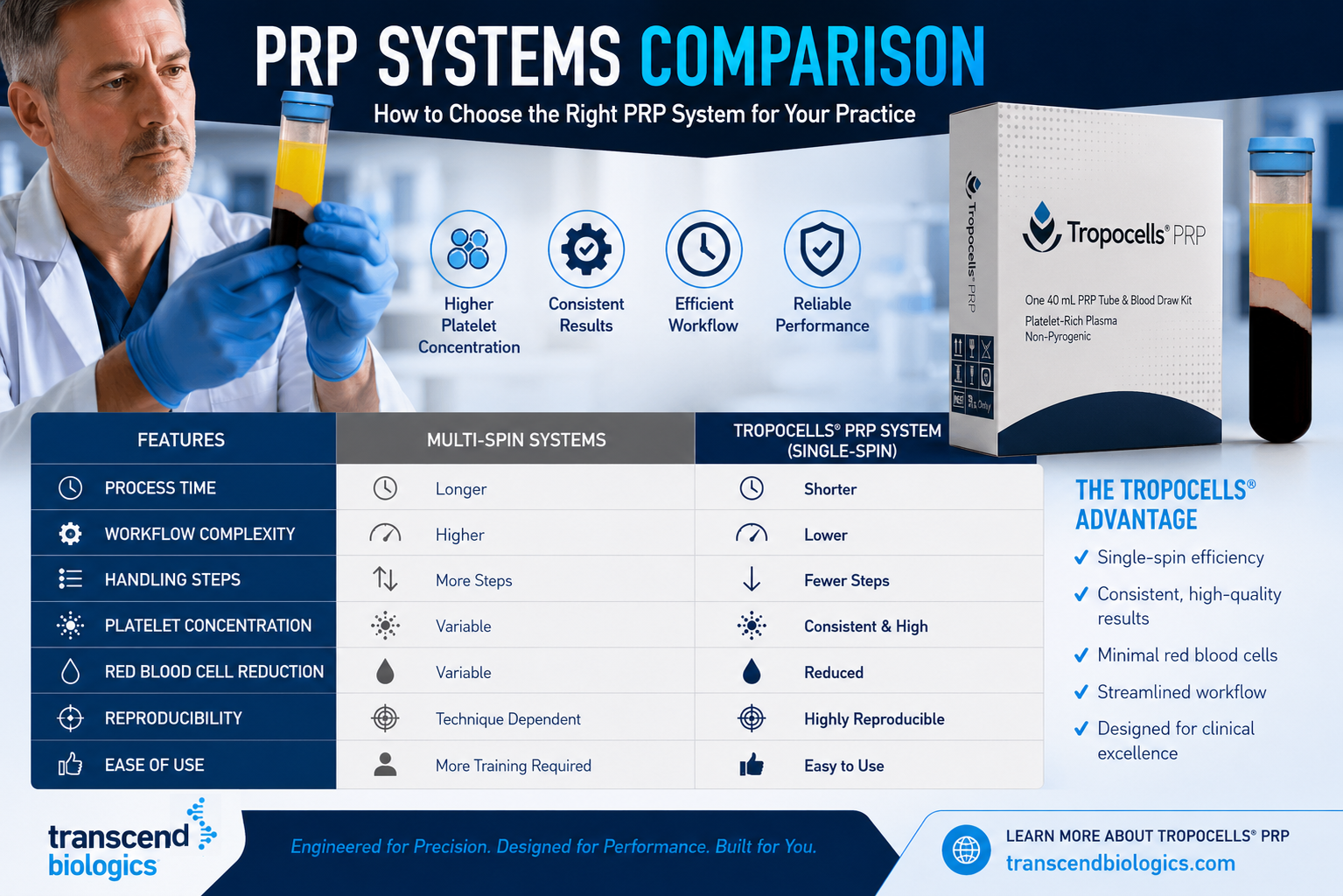
Introduction: Why PRP System Comparison Matters
A PRP systems comparison is important when physicians evaluate platelet-rich plasma technology. As more systems enter the market, differences between them become clearer. Therefore, clinicians benefit from understanding how these systems vary before making a decision.
Furthermore, because PRP is prepared at the point of care, system design directly affects workflow, consistency, and final composition.
What Makes PRP Systems Different?
A thorough PRP systems comparison begins with understanding what separates one system from another. Specifically, variations in centrifugation, tube design, and extraction methods can change the final preparation. As a result, outcomes may differ between systems.
Key variables include:
- platelet concentration
- leukocyte levels
- red blood cell reduction
- workflow complexity
- reproducibility
Because of these differences, physicians often compare systems carefully before selecting one.
👉 Learn more about PRP basics: https://transcendbiologics.com/what-is-prp
👉 For an overview of platelet biology, see: Platelet Physiology – StatPearls, NCBI
Single-Spin vs Multi-Spin PRP Systems
Spin protocol is one of the most practical factors in any PRP systems comparison. Consequently, understanding the difference between single-spin and multi-spin systems is essential before choosing one.
Single-Spin Systems
Single-spin systems use one centrifugation cycle. As a result, they are generally faster and easier to use. In addition, fewer steps reduce handling and simplify training.
Advantages include:
- shorter procedure time
- fewer handling steps
- simpler training
Multi-Spin Systems
Multi-spin systems, on the other hand, require more than one spin cycle. Because of this, the process takes longer and involves additional steps. Moreover, in contrast to single-spin systems, outcomes may depend more heavily on technique.
Considerations include:
- longer preparation time
- increased workflow complexity
- greater technique sensitivity
Leukocyte Content in PRP Systems
Leukocyte content is another key factor in any PRP systems comparison. Specifically, some systems produce leukocyte-rich PRP, while others produce leukocyte-poor PRP. Furthermore, research published by the National Institutes of Health suggests leukocyte composition may influence clinical outcomes depending on the indication.
Therefore, clinicians often review leukocyte levels when comparing systems.
👉 Read about leukocyte differences: https://transcendbiologics.com/leukocyte-rich-vs-leukocyte-poor-prp/
Red Blood Cell Reduction
Red blood cell reduction also varies across systems and similarly deserves attention in any PRP systems comparison. In general, systems that limit red blood cells may produce a cleaner preparation. For this reason, physicians evaluate separation accuracy and consistency.
As part of this review, clinicians consider:
- separation technology
- layer isolation accuracy
- repeatability between procedures
Workflow and Clinical Efficiency
Workflow plays a major role in system selection. For example, clinicians assess preparation time, ease of use, and staff training needs. Additionally, repeatability is essential for consistent performance across procedures.
Because of this, systems designed for streamlined workflows often integrate more easily into daily practice. Furthermore, simplified processes tend to reduce the risk of variability between operators.
Where Tropocells® PRP Fits
The Tropocells® PRP system is designed to support consistent preparation with a simplified workflow. Because it uses a single-spin process, preparation can be completed efficiently. In addition, controlled separation supports repeatable results across procedures.
Key characteristics include:
- single-spin workflow
- controlled separation
- reduced red blood cell content
- repeatable process
👉 Explore Tropocells PRP: https://transcendbiologics.com/tropocells-prp
Choosing the Right PRP System
When conducting a PRP systems comparison, physicians must balance several factors. Specifically, clinical performance, workflow efficiency, and practice goals all play a role.
Clinical Factors
- platelet concentration
- leukocyte profile
- reproducibility
Operational Factors
- workflow efficiency
- ease of use
- procedure time
Practice Goals
- patient demand
- service expansion
- integration into current workflows
For additional clinical context, the American Academy of Orthopaedic Surgeons and peer-reviewed resources such as PubMed offer published literature on PRP applications. Therefore, reviewing this evidence alongside system specifications can support more informed decision-making.
Because these factors vary by practice, system selection should ultimately align with both clinical needs and operational priorities.
Conclusion
A PRP systems comparison helps physicians understand how technology affects preparation and workflow. While systems may appear similar on the surface, important differences exist in spin protocol, leukocyte content, red blood cell reduction, and workflow efficiency.
To summarize, system design, workflow efficiency, and consistency all matter. Therefore, careful evaluation remains essential when selecting the right system for your practice.