PRP for Hair Restoration: What the Research Shows
Publish date: October 21, 2026
Introduction: Why Hair Restoration Clinics Are Looking at PRP
PRP for hair restoration has become one of the most discussed topics in aesthetic and dermatology practices over the past decade. As a result, many clinics now field patient questions about it before they have built a protocol of their own. In addition, patients often arrive with headlines that overstate or understate what the research reports. This post reviews what published studies say, where the evidence is still thin, and what practices should weigh before they add a platelet-rich plasma service.
How Researchers Study PRP for Hair Restoration
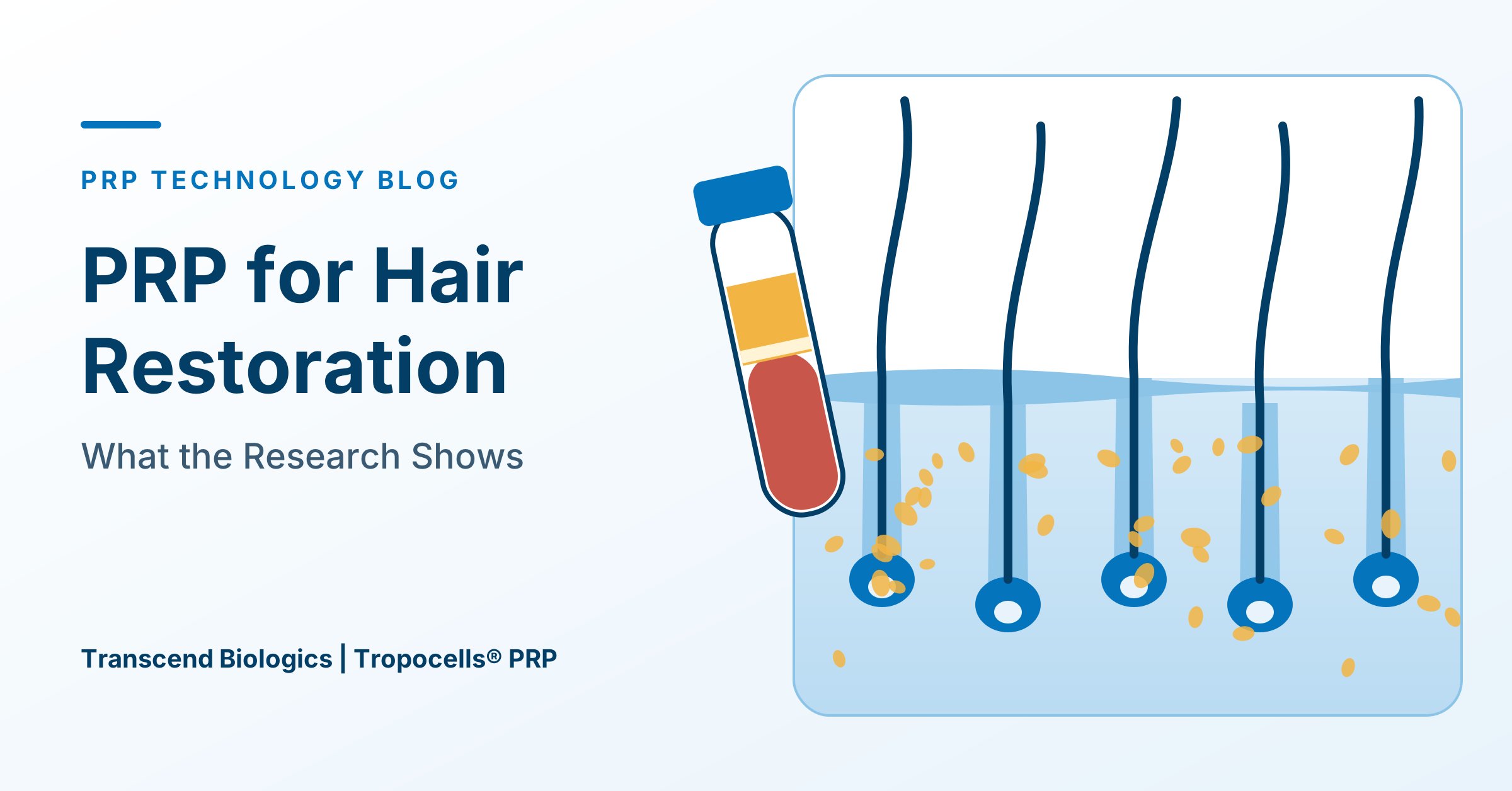
Platelet-rich plasma is an autologous preparation, which means it comes from the patient’s own blood. During preparation, a centrifuge separates the blood so that platelets concentrate in a small volume of plasma. Platelets carry growth factors, such as PDGF, VEGF, and TGF-β, that researchers associate with cell signaling and tissue support. For this reason, investigators have explored whether PRP placed in the scalp supports the hair follicle environment.
Most clinical studies in this area focus on androgenetic alopecia, the common pattern of hair thinning seen in both men and women. Researchers have also examined PRP in other settings, including:
- use alongside hair transplant procedures
- combination protocols with microneedling
- comparison with, or use alongside, established topical and oral options
- female pattern hair thinning, where fewer studies exist
What the Research Shows
Early randomized work set the tone for later studies. For example, Gentile and colleagues ran a half-head, placebo-controlled trial in which one side of each participant’s scalp received PRP and the other side received placebo. After three sessions spaced 30 days apart, the team reported a mean increase of 33.6 hairs in the target area. They also reported a mean density gain of 45.9 hairs per cm² over baseline, with no side effects during the study period. However, the trial was small, and the authors called for larger controlled studies. You can read the full trial through NCBI’s PubMed Central.
Since then, the evidence base has grown. In 2024, Kieling and colleagues pooled randomized trials in a systematic review and meta-analysis in Anais Brasileiros de Dermatologia. Across 13 trials in the meta-analysis, PRP showed a mean hair density gain of about 27.5 hairs per cm² compared with placebo. Hair shaft diameter, on the other hand, did not show a statistically significant difference. The abstract is available on PubMed.
Just as important, the authors rated the certainty of this evidence as low. They pointed to very high heterogeneity between studies, small sample sizes, and signs of possible publication bias. They also noted that preparation protocols, session schedules, and follow-up periods differed widely from one trial to the next. In other words, the research points in a promising direction. Still, it does not yet tell clinicians which protocol performs most consistently, or for which patients.
What Hair Restoration Practices Should Evaluate
Before a clinic adds a PRP service, it helps to work through several practical questions. In particular, practices should consider:
- how consistently the preparation system concentrates platelets from one draw to the next
- whether the protocol calls for leukocyte-poor or leukocyte-rich PRP, and why (see our post on leukocyte-rich vs. leukocyte-poor PRP)
- session spacing, maintenance intervals, and how the practice will track results with standardized photos or trichoscopy
- staff training for blood draw, sterile handling, and scalp injection technique
- how the practice will set patient expectations, given that published results vary
- pricing, since PRP for hair restoration is typically a cash-pay service
Because protocol differences appear so often in the literature, consistency of preparation deserves special attention. Our post on PRP platelet dosing explains why platelet yield matters when you compare results across studies or across patients.
Where Tropocells® PRP Fits
The Tropocells® PRP system uses a single-spin design that supports a controlled, repeatable separation process. As a result, practices can build a hair restoration protocol around a consistent preparation step rather than adjusting for variability at every session. In addition, clinics that already use Tropocells® PRP in other service lines can apply the same system and workflow to scalp procedures. Learn more about the Tropocells® PRP system.
Conclusion
Overall, PRP for hair restoration has a growing body of randomized research behind it, and pooled data suggest a measurable effect on hair density. Still, the certainty of that evidence remains low, and protocols vary widely. Therefore, practices that offer this service should rely on consistent preparation, careful documentation, and clear conversations with patients about expected results.
Disclaimer: This content serves educational purposes only and does not offer medical advice. FDA regulations apply to platelet-rich plasma preparation devices. Always check current regulatory guidance and product labeling for intended use information.