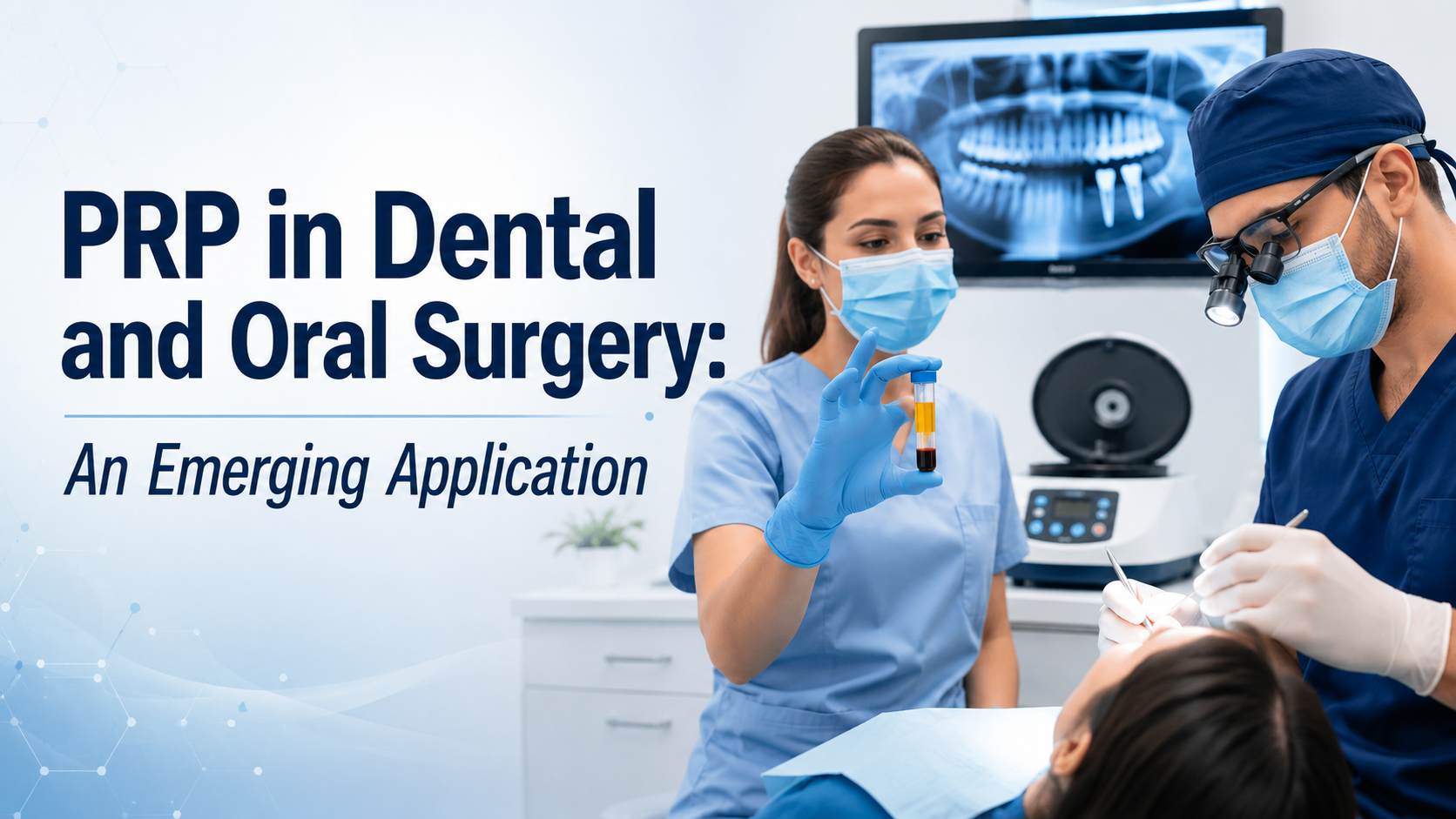
PRP in Dental and Oral Surgery: An Emerging Application
Publish date: July 29, 2026
Introduction: A Growing Area of Interest
PRP dental and oral surgery applications have drawn growing interest from providers in recent years. Oral tissue heals inside a highly vascular, biologically active site, so practitioners have started to ask a simple question: can PRP’s concentrated growth factors support existing surgical techniques?
This article covers where PRP dental and oral surgery applications stand today, what the research shows, and what practices should weigh before they adopt PRP.
Where PRP Dental and Oral Surgery Applications Are Emerging
Dental and oral surgery providers now study PRP in several contexts, including:
- tooth extraction sites, especially when a patient needs multiple extractions
- bone grafting procedures before implant placement
- periodontal surgical procedures
- sinus lift procedures in oral and maxillofacial surgery
Because these procedures already happen at a controlled surgical site, a point-of-care PRP step can fit naturally into the existing workflow. However, the team still needs training on this added step before they use it on patients.
What the Research Says
Research on PRP in oral and maxillofacial care keeps growing, and findings vary by procedure type and study design. For example, clinicians can review relevant studies via PubMed. In addition, Platelet Physiology, NCBI offers useful background on the biology behind these applications.
Because study protocols and outcome measures differ across the literature, it can be hard to compare results directly between studies. As a result, many practitioners weigh the evidence alongside their own goals for the procedure, rather than leaning on a single study alone.
What Dental Practices Should Evaluate
Before a practice adds PRP to oral surgery procedures, it typically weighs a few factors:
- the extra chair time PRP preparation needs
- staff training needs for the blood draw and processing steps
- equipment and disposable costs relative to procedure volume
- how the practice will document and explain PRP use to patients
Where Tropocells® PRP Fits
The Tropocells® PRP system’s single-spin design aims to keep the preparation step quick, which can help a surgical team hold onto chair-time efficiency when it layers PRP onto existing procedures. Because the process uses fewer manual steps, a surgical team can train on it more easily.
Learn more: Tropocells® PRP
Conclusion
PRP in dental and oral surgery remains an evolving area of clinical interest. Therefore, practices that consider this application benefit from reviewing current literature, checking workflow fit, and talking through goals with their surgical team before they adopt it.
Note: this content serves educational purposes only and does not offer medical or dental advice. FDA regulations apply to platelet-rich plasma preparation devices; check current regulatory guidance and product labeling for intended use information.