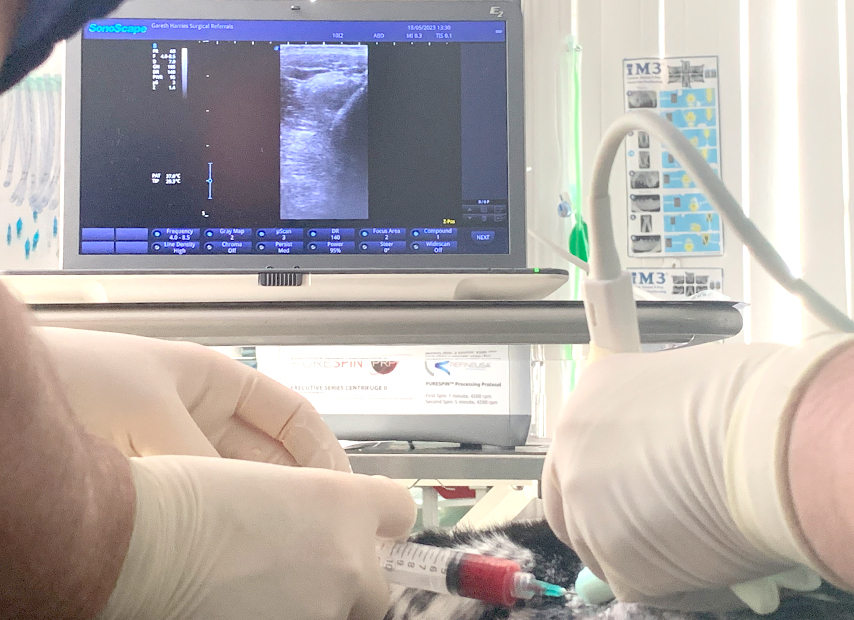
Introduction: Why Ultrasound Matters in PRP Procedures
Interest in platelet-rich plasma preparation continues to grow across orthopedics and sports medicine.
At the same time, clinicians are focusing on accuracy. Therefore, many now use ultrasound-guided PRP injections to improve precision.
PRP is derived from a patient’s own blood. Clinicians use a PRP preparation system to concentrate platelets before injection.
Because PRP is autologous, it remains an area of active research in musculoskeletal care.
What Is Platelet-Rich Plasma (PRP)?
Platelet-rich plasma is an autologous biologic preparation.
Clinicians prepare PRP using a PRP preparation system and centrifugation.
Platelet-rich plasma preparation includes:
• collecting a blood sample
• centrifuging the sample
• separating blood components
• isolating platelet-rich plasma
Platelets contain signaling proteins that are widely studied in tissue repair and recovery.
Ultrasound in Orthopedic Practice
Ultrasound has become a valuable tool in orthopedic care.
First, it provides real-time imaging. In addition, it does not use radiation.
Because of this, clinicians use ultrasound to evaluate:
• joint structures
• tendons and ligaments
• fluid collections
• soft-tissue conditions
As a result, ultrasound supports both diagnosis and procedure guidance.
Ultrasound-Guided PRP Injections: Why Precision Matters
Ultrasound allows clinicians to see the treatment area in real time.
Therefore, ultrasound-guided PRP injections can improve injection accuracy.
Key advantages include:
• precise needle placement
• real-time visualization
• targeted delivery to affected tissue
• improved procedural control
In addition, clinicians can adjust needle position during the procedure. This helps ensure accurate placement within the target area.
Evidence Supporting Ultrasound Guidance
Research shows that ultrasound guidance can improve injection accuracy.
For example, studies comparing ultrasound-guided vs landmark-based injections report higher accuracy across many joints.
Reported accuracy ranges:
| Body Area | Ultrasound-Guided | Landmark-Based |
|---|---|---|
| Shoulder (Glenohumeral) | 92% | 72% |
| AC Joint | 90–100% | 17–72% |
| Biceps Tendon | 87% | 27% |
| Elbow | 91% | 64% |
| Wrist/Hand | 94–100% | 59–82% |
| Hip | 97–100% | 67–78% |
| Knee | 96–100% | 55–100% |
| Foot/Ankle | 100% | 58–100% |
As a result, many clinicians incorporate ultrasound into PRP injection workflows.
How Ultrasound Enhances PRP Procedures
Ultrasound improves platelet-rich plasma preparation procedures in several ways.
1. Improved Accuracy
Ultrasound helps clinicians target the exact tissue location.
2. Real-Time Adjustments
Clinicians can reposition the needle during the procedure.
3. Visualization of Anatomy
Ultrasound shows muscles, ligaments, tendons, and joints clearly.
4. Avoidance of Critical Structures
Clinicians can avoid nerves and blood vessels.
5. Procedure Monitoring
Ultrasound allows before-and-after imaging when needed.
PRP Preparation Systems and Workflow Integration
Clinicians often combine PRP preparation systems with ultrasound guidance.
First, they prepare PRP using centrifugation. Next, they use ultrasound to guide injection.
This combination supports:
• efficient in-office workflow
• controlled PRP delivery
• improved procedural consistency
As a result, many practices adopt both technologies together.
Practice Growth and Patient Experience
In addition to clinical workflow, practices also evaluate operational impact.
Ultrasound-guided PRP procedures may support:
• improved patient experience
• efficient treatment delivery
• expanded service offerings
However, all treatment decisions remain based on physician evaluation and clinical judgment.
Advanced Ultrasound Technology: Wisonic Navi Series
Transcend Biologics supports practices with advanced ultrasound technology.
For example, the Wisonic Navi Series offers:
• 19-inch touchscreen display
• adjustable height system
• extended battery operation
• real-time needle visualization (wiNeedle™)
• integrated education tools (wiLearn)
These features support clinicians in performing ultrasound-guided procedures.
Conclusion
Platelet-rich plasma preparation continues to evolve.
At the same time, ultrasound-guided PRP injections are becoming more common.
Because ultrasound improves visualization and accuracy, many clinicians now combine:
• PRP preparation systems
• real-time imaging guidance
As research continues, this integrated approach may support more consistent and precise procedural workflows.
Regulatory Notice
Tropocells® systems are intended for the preparation of autologous platelet-rich plasma.
The clinical use of PRP is determined by the treating physician based on patient evaluation and professional judgment.
Statements regarding PRP and ultrasound guidance reflect published scientific literature and are not intended to imply FDA-cleared indications for specific clinical outcomes.