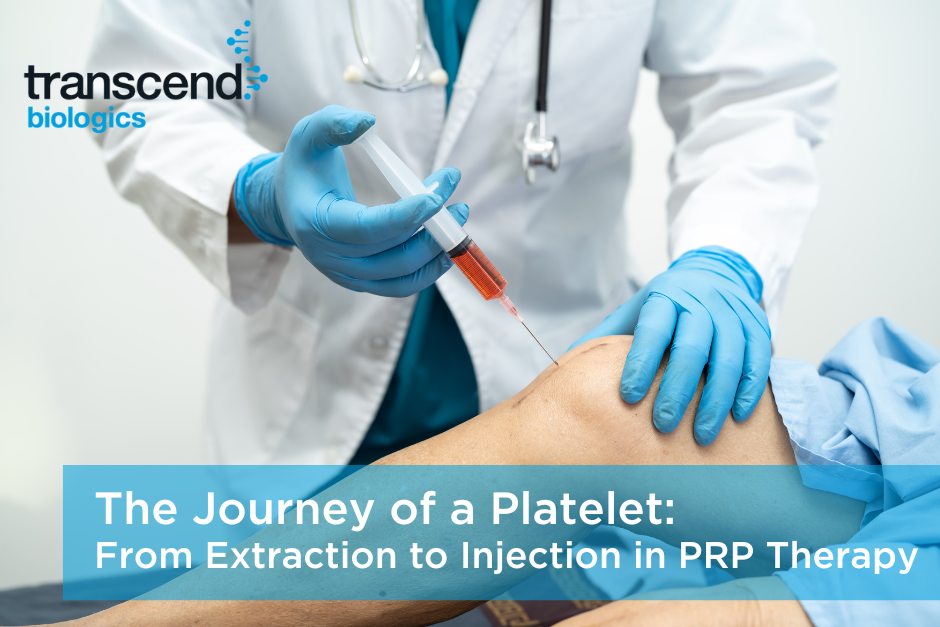
Platelet-rich plasma (PRP) preparation has become an important topic in orthopedic, sports medicine, and veterinary practices. As interest in biologic technologies grows, many clinicians want to better understand how PRP preparation systems work.
The process begins with a simple blood draw. Next, clinicians use centrifugation technology to separate the blood components. Finally, they collect the platelet-rich portion of plasma according to the device’s instructions for use.
By understanding this process, healthcare professionals can better evaluate PRP preparation technology used in modern medical and veterinary practices.
Step 1: Blood Collection
First, the process begins with the collection of a small sample of whole blood.
A healthcare professional draws the blood from the patient using sterile components designed for PRP preparation. Most preparation systems require 11 mL to 66 mL of blood, depending on the device and the desired platelet concentration.
Because PRP comes from the patient’s own blood, clinicians often describe it as an autologous biologic preparation.
Step 2: Centrifugation
Next, the clinician places the blood sample into a centrifuge, a machine that spins the blood at high speed.
During centrifugation, the spinning motion separates blood components based on density. As a result, the blood separates into several layers.
Typically, these layers include:
Plasma layer – the upper portion that contains plasma and platelets
Separator layer – a gel or interface that helps isolate platelets
Red blood cell layer – the dense components that settle at the bottom
Because these components have different densities, centrifugation allows clinicians to isolate the platelet-rich portion of plasma.
Step 3: Removal of Platelet-Poor Plasma
After centrifugation, the plasma layer contains both platelet-rich and platelet-poor portions.
First, the clinician removes the upper portion of plasma. This portion contains relatively few platelets and is called platelet-poor plasma (PPP).
Next, the remaining plasma above the separator layer contains a higher concentration of platelets. This portion becomes the platelet-rich plasma preparation.
Therefore, the amount of plasma removed can influence the final platelet concentration.
Step 4: PRP Collection
After removing platelet-poor plasma, the clinician gently mixes the remaining plasma to re-suspend the platelets near the separator layer.
This step distributes the platelets throughout the remaining plasma. As a result, the final preparation contains a higher platelet concentration compared with whole blood.
At this point, the platelet-rich plasma preparation is ready according to the device’s instructions for use.
Platelets and Biological Signaling
Platelets play an important role in several natural biological processes.
For example, platelets support blood clotting and participate in cellular signaling during tissue repair. In addition, platelets contain signaling proteins and growth factors that influence cellular communication.
Because of these characteristics, platelet biology has become an important area of research in regenerative medicine and musculoskeletal science.
PRP Preparation in Clinical Practice
Today, healthcare professionals in several specialties evaluate PRP preparation technology.
These specialties include:
orthopedic surgery
sports medicine
pain management
podiatry
rehabilitation medicine
veterinary medicine
Clinicians often compare PRP preparation systems based on several factors. For example, they evaluate platelet concentration, centrifugation protocols, workflow efficiency, and equipment design.
Therefore, understanding how PRP preparation systems work helps clinicians choose technology that fits their clinical practice.
Conclusion
The journey of a platelet—from blood collection to PRP preparation—demonstrates how centrifugation technology can isolate and concentrate platelets from whole blood.
Although the preparation process usually takes only minutes, researchers continue to study platelet biology and PRP preparation technology.
As a result, clinicians continue to evaluate new systems and workflows that support biologic preparation in modern healthcare environments.