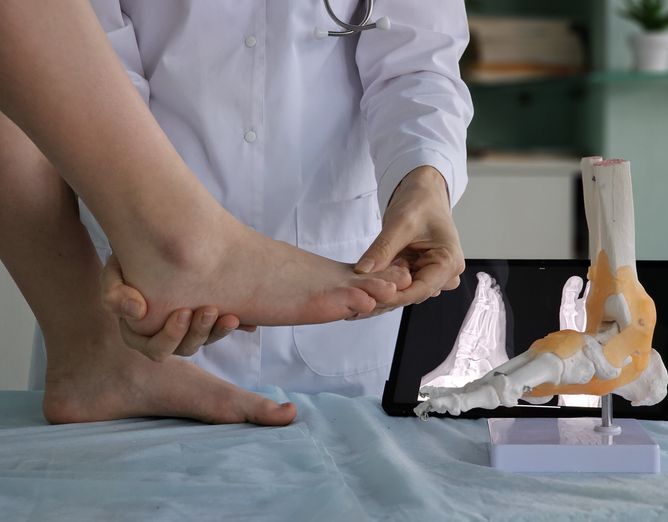
The Growing Interest in PRP in Podiatry
Podiatrists regularly manage conditions involving the foot and ankle that may be associated with tissue stress, overuse, or chronic degeneration. In recent years, platelet-rich plasma (PRP) preparation has gained attention among foot and ankle specialists as part of regenerative medicine workflows used in orthopedic and sports medicine settings.
Platelet-rich plasma is prepared from a patient’s own blood using a centrifugation process that concentrates platelets within the plasma fraction. Because platelets contain signaling proteins and biologically active components, PRP preparation technologies have become an area of active clinical research across multiple specialties, including podiatry.
As research continues to explore the role of biologic therapies in musculoskeletal medicine, podiatrists are increasingly evaluating PRP preparation systems as part of their clinical toolkit.
What Is Platelet-Rich Plasma (PRP)?
Platelet-rich plasma is produced by collecting a small volume of whole blood and processing it using a centrifuge to separate blood components. The process concentrates platelets in a portion of the plasma, producing platelet-rich plasma.
Platelets are small cell fragments involved in normal blood clotting and the body’s response to tissue injury. They contain various growth factors and signaling proteins that are released during the body’s natural repair processes.
PRP preparation systems are designed to isolate and concentrate these platelets using a controlled centrifugation workflow. The resulting platelet-rich plasma can then be prepared for clinical use according to the system’s instructions for use.
Because PRP is derived from the patient’s own blood, it is commonly referred to as an autologous biologic preparation.
Why Podiatrists Are Exploring PRP Preparation
Foot and ankle specialists frequently treat patients with musculoskeletal conditions involving ligaments, tendons, fascia, and joint structures. As regenerative medicine technologies evolve, some podiatrists have incorporated biologic preparation techniques, including PRP, into their clinical practices.
PRP preparation is being studied in a variety of musculoskeletal applications, including research involving:
plantar fascia conditions
Achilles tendon disorders
ligament injuries
chronic tendon pathology
sports-related foot and ankle injuries
Published studies have explored the biological characteristics of PRP, including platelet concentration, cellular composition, and the release of growth factors.
However, clinical outcomes can vary depending on multiple factors such as preparation method, platelet concentration, injection protocol, and patient characteristics.
PRP Preparation Systems in Podiatry Practices
PRP preparation in podiatry typically involves a straightforward in-office workflow:
Blood Collection
A small amount of the patient’s blood is collected using sterile components.Centrifugation
The blood sample is processed in a centrifuge to separate red blood cells, plasma, and platelet-rich fractions.Platelet Concentration
The system isolates the plasma layer containing concentrated platelets.Preparation of PRP
The platelet-rich plasma is then prepared according to the device instructions for use.
Many podiatry practices value PRP preparation systems that offer:
consistent platelet recovery
low red blood cell content
reproducible centrifugation workflows
sterile single-use preparation kits
Because preparation technologies differ between systems, clinicians often evaluate platelet yield, platelet dose, and cellular composition when selecting a PRP platform.
Current Research in PRP and Foot & Ankle Medicine
Scientific literature continues to examine the biological properties of platelet-rich plasma and its potential role in musculoskeletal medicine.
For example, studies have evaluated PRP preparation in relation to chronic plantar fascia conditions, comparing PRP with other therapeutic approaches commonly used in podiatry practices.
One study published in SICOT-J (Journal of the Société Internationale de Chirurgie Orthopédique et de Traumatologie) examined outcomes in patients treated with PRP preparation for plantar fascia conditions. Research such as this contributes to the ongoing discussion surrounding biologic therapies in orthopedic and sports medicine settings.
However, investigators frequently note that additional research is needed to standardize PRP preparation protocols, platelet concentrations, and clinical treatment strategies.
Challenges and Considerations in PRP Preparation
Although interest in PRP continues to grow, several factors influence its clinical adoption.
Variability Between PRP Systems
Different PRP preparation systems may produce varying platelet concentrations and cellular profiles depending on centrifuge settings, separation technology, and preparation methods.
Lack of Standardized Protocols
There is currently no universally accepted protocol for platelet concentration, injection frequency, or preparation technique.
Insurance Coverage
Many biologic procedures are performed as cash-pay services, which may influence how practices incorporate PRP into their clinical offerings.
As research progresses, greater standardization may emerge in PRP preparation techniques and clinical protocols.
The Future of PRP in Foot and Ankle Medicine
Regenerative medicine continues to be an area of active research across multiple specialties, including orthopedics, sports medicine, and podiatry.
PRP preparation technologies are likely to remain an important area of study as clinicians and researchers work to better understand the biological mechanisms involved in tissue repair and musculoskeletal recovery.
For podiatrists interested in biologic preparation systems, ongoing clinical research, improved preparation technologies, and standardized protocols may help further clarify the role of PRP in foot and ankle medicine.
References
SICOT-J. (2020).
Evaluation of platelet-rich plasma in plantar fascia conditions. Journal of the Société Internationale de Chirurgie Orthopédique et de Traumatologie.
National Center for Biotechnology Information (NCBI). (2021).
Research examining biologic therapies including PRP in musculoskeletal medicine.