Platelet-rich plasma (PRP) has become one of the most studied biologic preparations in orthopedic medicine, sports medicine, and regenerative medicine research. As interest in biologic technologies grows, many clinicians want to understand how PRP preparation systems work and how they influence the characteristics of PRP samples.
In clinical settings, physicians create PRP by processing a patient’s blood sample with specialized PRP preparation systems. These systems use centrifugation technology to separate blood components and isolate the platelet-rich plasma fraction.
Therefore, physicians who evaluate PRP technology often focus on two key questions: how PRP is produced and how preparation systems influence platelet concentration and cellular composition.
What Is Platelet-Rich Plasma (PRP)?
Platelet-rich plasma is a plasma fraction derived from a patient’s own blood that contains a higher concentration of platelets than baseline circulating blood.
Platelets are small blood components that circulate throughout the bloodstream. First, they help regulate hemostasis, the biological process that helps stop bleeding after vascular injury. In addition, platelets contain signaling proteins stored within intracellular granules.
Researchers frequently study these platelet-associated proteins in laboratory investigations of tissue biology and cellular communication.
Common examples include:
Platelet-Derived Growth Factor (PDGF)
Transforming Growth Factor-Beta (TGF-β)
Vascular Endothelial Growth Factor (VEGF)
Because PRP originates from a patient’s own blood, clinicians classify it as an autologous biologic preparation.
Why PRP Preparation Systems Are Necessary
Platelet-rich plasma does not exist in circulating blood in its concentrated form. Instead, clinicians must produce PRP through a controlled preparation process.
For this reason, medical practices use PRP preparation systems to process blood samples and isolate the platelet-rich plasma fraction.
These systems typically include:
sterile blood collection tubes
centrifugation equipment
separation technology for plasma isolation
closed-system processing components
As a result, clinicians can prepare PRP within professional healthcare environments such as orthopedic clinics, sports medicine practices, and ambulatory surgical centers.
Step-by-Step PRP Preparation Process
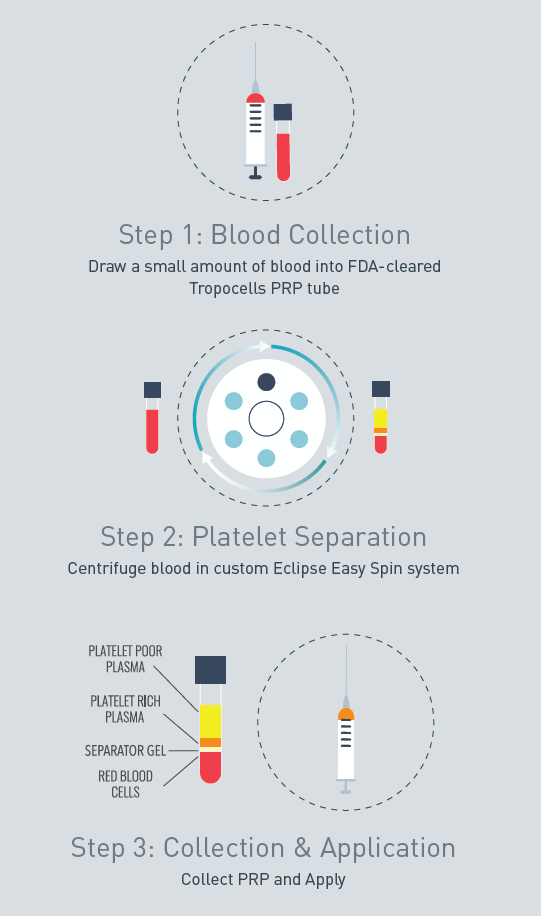
Although preparation protocols vary between systems, most PRP preparation workflows follow a similar sequence.
1. Blood Collection
First, a clinician performs a standard venous blood draw. The clinician collects a small volume of whole blood using sterile collection equipment.
The volume of blood collected depends on the preparation system and the amount of PRP required.
2. Centrifugation
Next, the clinician places the blood sample into a centrifuge.
The centrifuge spins the sample at controlled speeds. During this process, centrifugal force separates blood components based on density. Heavier components move outward, while lighter components remain closer to the center.
3. Separation of Blood Components
After centrifugation, the blood typically separates into several layers:
Red blood cells (RBCs) – the densest component
Platelet-poor plasma (PPP) – plasma containing relatively few platelets
Platelet-rich plasma (PRP) – plasma containing concentrated platelets
Clinicians then identify the platelet-rich plasma fraction for isolation.
4. Isolation of Platelet-Rich Plasma
Finally, the clinician isolates the platelet-rich plasma layer.
PRP preparation systems often include specialized mechanisms that help isolate this fraction. These mechanisms may include:
gel-separation barriers
plasma extraction ports
manual or automated transfer processes
Because preparation systems differ in design, they can influence the efficiency of platelet separation.
Key Variables in PRP Preparation
Researchers frequently note that PRP samples can vary depending on preparation protocols and system design.
Several factors influence the final composition of platelet-rich plasma.
Platelet Concentration
Platelet concentration remains one of the most commonly measured variables in PRP research.
PRP preparation systems aim to increase platelet levels relative to baseline blood concentrations. However, centrifugation settings and device design can influence the degree of platelet concentration.
Leukocyte Content
Another important variable involves leukocyte concentration.
Some PRP preparations contain higher levels of white blood cells, while others aim to reduce leukocyte content.
Scientific literature commonly describes these preparations as:
leukocyte-rich PRP (LR-PRP)
leukocyte-poor PRP (LP-PRP)
Red Blood Cell Carryover
Researchers also examine red blood cell contamination when evaluating PRP samples.
Higher levels of red blood cells may influence the cellular composition of the plasma fraction. Therefore, many preparation systems attempt to minimize RBC carryover during centrifugation.
Closed-System PRP Preparation
Many modern PRP preparation systems use closed-system processing.
Closed systems allow blood collection, centrifugation, and plasma isolation to occur within sealed sterile components. Consequently, clinicians can maintain a consistent sterile workflow during processing.
Because of this design, closed systems are commonly used in clinical environments where sterile handling is essential.
PRP Preparation in Medical Practices
Today, clinicians prepare PRP in several healthcare settings, including:
orthopedic clinics
sports medicine practices
ambulatory surgical centers
pain management practices
veterinary medicine clinics
In these environments, physicians can prepare platelet-rich plasma at the point of care using centrifugation equipment and PRP preparation kits.
The clinical use of PRP preparations is determined by the treating physician based on patient evaluation and professional judgment.
Tropocells® PRP Preparation System
The Tropocells® PRP preparation system supports platelet separation using centrifugation and gel-separation technology.
Key design features include:
closed-system processing
controlled platelet separation
reduced red blood cell carryover
reproducible preparation workflow
These features help clinicians prepare platelet-rich plasma efficiently within clinical environments.
Continued Research in PRP Preparation
Scientific interest in PRP preparation continues to grow. Researchers now study platelet biology, centrifugation protocols, and biologic signaling pathways across many areas of musculoskeletal medicine.
Current investigations focus on:
differences between PRP preparation systems
platelet recovery efficiency
leukocyte concentration variability
standardization of centrifugation protocols
As research progresses, scientists hope to better understand how preparation methods influence the biological characteristics of PRP samples.
Conclusion
PRP preparation systems play a central role in producing platelet-rich plasma in clinical environments. Through centrifugation and separation technology, these systems allow clinicians to isolate platelet-rich plasma from whole blood samples.
Because preparation methods can influence platelet concentration and cellular composition, physicians evaluating orthobiologic technologies should understand how PRP preparation systems work.
As platelet biology research continues to expand, PRP preparation technology will likely remain an important focus in musculoskeletal and regenerative medicine research.
Regulatory Notice
Tropocells® systems are intended for the preparation of autologous platelet-rich plasma. The clinical use of PRP is determined by the treating physician.
Statements regarding clinical applications reflect published scientific literature and do not imply FDA-cleared indications.